In Greek mythology, the Pleiades were the seven daughters of the Titan Atlas and the Oceanid Pleione, the protectress of sailing. The daughters were companions of the Goddess Artemis, joining Her on hunts, as well as the nursemaids who raised the God Dionysus as an infant. Many of the seven sisters bore children to the other Gods. Most notable is the oldest sister, the Goddess Maia, who mothered the God Hermes with the God Zeus.
In most mythologies around the world that acknowledge the cluster, they are counted as seven even though currently only six are visible to the naked eye. In Greek mythology the Goddes Merope, youngest of the seven daughters, married the human King Sisyphus, and in doing so became mortal and faded away. The theme of Merope’s loss of immortality recurres in myths from several different cultures relating to this star cluster.
The Greeks also marked Pleiades’ heliacal rising (a phrase that describes the period when the stars are first visible in the night sky just before dawn) as the beginning of the sailing season. In fact, the Pleiades star cluster was so important to Grecian navigation at the time that it’s theorized that the cluster was originally named with this in mind (plein meaning to sail in ancient Greek), and that the Oceanid Pleione was named later based on the name of her children. In the Odyssey, Homer writes of how the wandering Odysseus used the Pleiades to navigate his way home throughout his trials. This heliacal rising would have also marked the beginning of the agricultural season, just as their rising in the east at the time of sunset would have marked the end of fair weather and thus the end of growing and sailing.
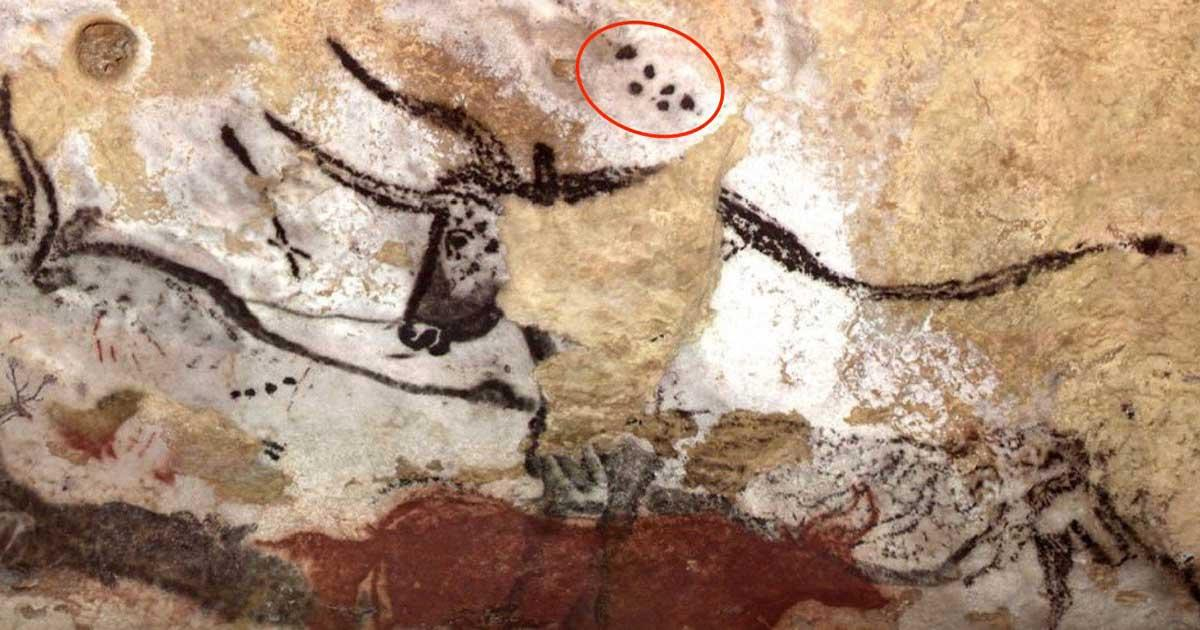
There is evidence that this asterism has had significance to mankind for as long as we have been making records. Cave paintings in Lascaux (France) show an aurochs with a spotted face (likely identified with the constellation we now know as Taurus, which the Pleiades are just northwest of) with a cluster of six dots in a configuration much like the Pleiades over the bull’s shoulder. Another cave painting in La-Tete-du-Lion cave (France) depicts another aurochs, this time with a similar configuration of seven dots on its flank – six clearly visible and one that appears partially erased. In the article Palaeolithic Timekeepers Looking At The Golden Gate Of The Ecliptic¹, Michael Rappenglück makes the argument that the configuration of this artwork in the context of the animals around it may have been an early human calendar of sorts, with the heliacal rising of the asterism at the time of the cave painting (approx 19,500BCE) being on the summer solstice and the setting at the winter solstice.
Other cultures have also used the Pleiades star cluster as an important signifier in time. In the areas of both China and India the heliacal rising was a traditional signifier of the spring equinox (which due to the precession of the equinoxes would have been the case around 2300BCE).
In the article Ancient Irish Star Lore: The Pleiades, Fairies and the Ancestral Dead², David Halpin indicates that the Pleiades would have been important markers to the ancient Celts for Beltane and Samhain.
Multiple Celtic myths and stories relate this star cluster to the dead and those who live in the spirit realms, with the star cluster perhaps being seen as a gate or portal to the realms beyond. Interestingly there are also indications that the Pleiades (called the Stròilìn in Ireland) are also associated with travel or navigation similar to the Greeks.
In these examples we see the Pleiades star cluster as being significant for orientation in time and space. It has been used to mark important times on what we now call the Wheel of the Year, but also acts as a guide for finding one’s way. We can call on the Pleiades as guides to help us find our way, whether we are seeking a path to the realms beyond or, like Odysseus, trying to survive the trials of life and reach the safety of home.
Article by Wren, 2°
Sources:
¹ Palaeolithic Timekeepers Looking At The Golden Gate Of The Ecliptic; The Lunar Cycle And The Pleiades In The Cave Of La-TETe-Du-Lion (Ardéche, France), Rappenglück, Michael. 1999.
² Ancient Irish Star Lore: The Pleiades, Fairies and the Ancestral Dead, Halpin, David. 2023.


Leave a Reply