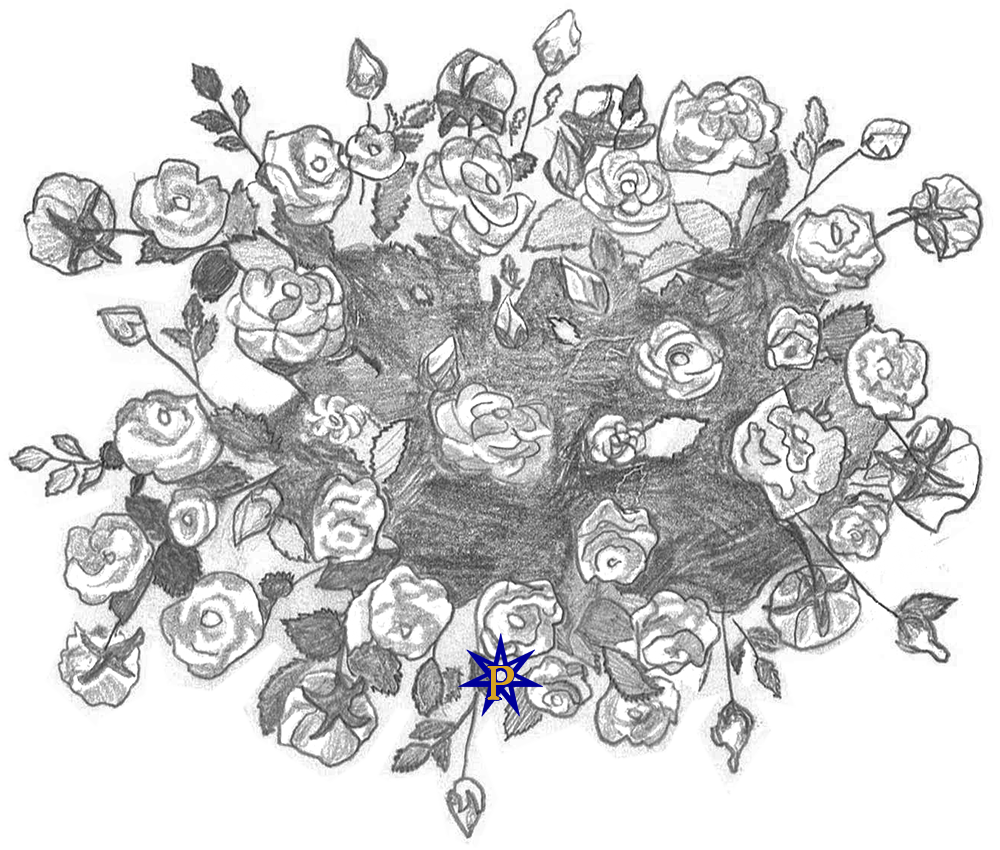
Litha is the summer Solstice, the longest day of the year (typically June 20th/21st). The term solstice comes from the Latin words sol (“Sun”) and sistere (“to stand still”). The Sun, having reached its apex, will now start to quiet sooner and rise later until balance is restored again at the Autumn Equinox (aka, Mabon).
Similar to Ostara, Litha is a relatively “new” celebration, from what historians can tell. Wicca borrows a great deal from the Celts and other British Isle cultures, but we don’t borrow the Celtic name for this period, “Midsummer.”
Also like Ostara, the primary source for the name Litha comes from the Venerable Bede’s De Temporum Ratione (The Reckoning of Time), published in 725. The book deals with a number of topics related to the passage of time, including information on the naming of the then-current English months.
It doesn’t say much about Litha, though, especially in contrast to how much detail Bede gave us for Ostara regarding the associated Goddess. Bede uses “Líða” as a short-hand for the Solstice itself and for the months of June and July, writing at one point, “Líða dicitur blandus, sive navigabilis, quod in utroque mense et blanda sit serenitas aurarum, et navigari soleant aequora.” “Lida¹ is called blandus, or navigable, because in both months the breezes are bland and serene, and the seas are usually navigable.” (Latin source (p 178) – Translated by me with an online translator.)1
For Wiccans, the Solstice marks the peak of power for Wicca’s patron God, the Lord. He is overflowing with life and light, while our patron Goddess, the Lady, having sparked new life at Beltane, has transitioned to her Mother aspect. They will now have Their wedding2, celebrating Their Union with a social acknowledgement as well as a power exchange (as the days get shorter and the nights get longer). “Hieros gamos” (or hierogamy) applies here – a Greek term for “sacred (or holy) marriage” which can be used in reference to marriage between Deities and/or the union between a Deity and human (such as Zeus and his numerus human consorts)3.
This is also a time when we are hoping our growing crops and herds, or developing projects and households, are benefiting from the energy raised toward “fertility” in all its forms at Beltane. As summer builds to the height of its power, we hope to carry some of that light and passion in our bellies as well.
Blessed Be!
Marrow, 2°
1 I enjoyed referencing the following article while tracking down more information about Bede! If you want to learn more about ancient Angelo-Saxon calendars, I encourage you to read: “Englisc Rímbóc: The Anglo-Saxon Calendar” by Wednesbury Shire, which is a part of White Marsh Theod
2 Different Wiccans and sects of Wicca have different interpretations of the Lord and Lady’s Cycle – some believe They get pregnant AND married at Beltane, or married at Beltane and pregnant at Litha. Ultimately, the goals and purposes within the Wheel of those themes can be achieved in whatever order makes sense to the practioners involved!
3 A sobering reflection on why this isn’t always a delightful affair – “The celebration of the Hieros Gamos…may have been a way to legitimize the Gods of invaders by wedding them to the Gods of conquered lands or to legitimize the rule of a human by giving them a divine relative” (“What is Hieros Gamos: The Union God and Goddess,” Dawn Black; April 24, 2025, ).

Copyright © 2026 Pleiades Coven & Grove
Leave a Reply